Loading page…
Private online guidance for important decisions · London & UK-wide

How to Perform Istikhara
How to Perform Istikhara
Istikhara is performed through a short, two-unit voluntary prayer followed by a specific dua, asking Allah for guidance on a decision you are unsure about. This guide walks through the process step by step, based on established Islamic practice, without inventing sources or embellishing what is actually required.
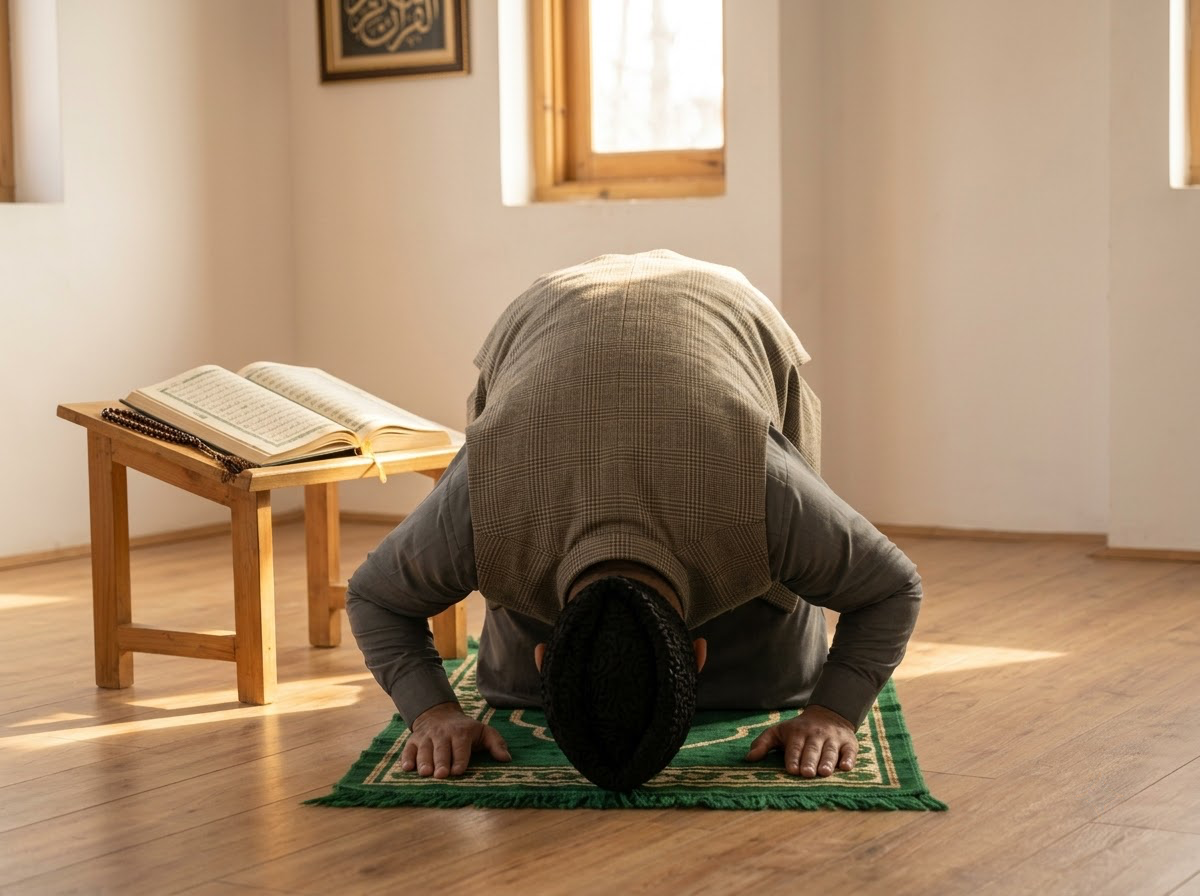
Islamic Istikhara UK
A simple, step-by-step method
Trusted online guidance, UK-wide
Rooted in Islamic sources, delivered with respect and care.
Fully confidential Islamic sources UK-wide, online
Before you begin
Prepare your intention
Begin by clarifying, in your own mind, the specific permissible decision you are asking about.
Istikhara is for genuine uncertainty about a permissible (halal) matter, not for something already forbidden or already religiously settled. Take a moment before you pray to be clear with yourself about what exactly you are asking guidance on. This method is sometimes searched for as istikhara ka tarika or istikhara karne ka tarika — the same method is set out step by step below.
Step by step
The method
- 01
1. Make your intention
Form a clear, sincere intention (niyyah) to pray Istikhara regarding your specific decision. This does not need to be spoken aloud.
- 02
2. Pray two rak’ahs
Perform two units of voluntary (nafl) prayer, following the normal structure of Islamic prayer, ideally at a time outside the periods when voluntary prayer is discouraged.
- 03
3. Recite the dua
After the prayer, recite the Istikhara dua, asking Allah to guide you towards what is good and away from what is harmful in this matter. See the full Arabic text, transliteration, and translation on our Istikhara dua page.
- 04
4. Name your decision
Where the dua allows, mention the specific matter you are asking about, either silently in your heart or in your own words alongside the dua.
- 05
5. Proceed with reasonable steps
Continue gathering information, asking questions, and consulting people you trust. Istikhara supports this process rather than replacing it.
- 06
6. Make your decision
Move forward with whichever option seems most reasonable, remaining open to circumstances changing, rather than waiting indefinitely for a dramatic sign.
After the prayer
Seeking guidance and making the decision
There is no requirement to feel a particular emotion, see a dream, or receive an obvious sign for the prayer to have been performed correctly. Many people describe a gradual sense of ease or difficulty forming around a decision over the following days, while others notice nothing distinct at all and simply proceed with the most sensible option available to them. Both experiences are normal.
If a decision continues to feel genuinely unclear, it is acceptable to repeat the prayer, take more time, seek further advice, or gather more information before deciding. Read more on our Istikhara signs page about interpreting (or not over-interpreting) what follows.
Practical notes
Practical considerations
Timing
Avoid praying during sunrise, solar noon, and sunset; otherwise, most times of day are acceptable.
Repetition
Istikhara can be repeated for the same decision if things remain unclear, without needing to worry that repeating it is improper.
State of mind
Approach the prayer calmly rather than anxiously seeking a specific result; the dua itself asks for what is good, not for a predetermined outcome.
Keep in mind
What this guide is not
A practical guide, not a substitute for scholarly advice.
This page explains the general method as commonly taught. It does not replace guidance from a qualified local scholar or imam on matters of religious detail, and it should not be read as claiming a single interpretation is universally agreed upon where genuine scholarly differences exist.
A worked example
Walking through Istikhara for a real decision
To make the method feel concrete, imagine you are considering a new job that would involve moving to a different city. You have thought about it, spoken to the people close to you, weighed the practical trade-offs, and you find yourself still genuinely unsure. This is exactly the kind of decision Istikhara is for.
You would begin by clarifying the decision in your own mind: not the vague feeling of “this whole situation”, but the specific choice in front of you — whether to accept this particular job. You would perform two rak’ahs of voluntary prayer, ideally at a time outside the periods when nafl prayer is discouraged. After the prayer, you would recite the Istikhara dua, and where the dua refers to “this matter”, you would mention the specific job and move — either silently in your heart or in your own words — so the prayer connects clearly to the decision at hand.
In the days that follow, you would continue with the normal, sensible steps: any final conversations you need to have, any last piece of research about the role, the city, or the practical logistics. You would notice whether the decision starts to feel more settled, whether it becomes noticeably harder to move on, or whether things simply stay ambiguous. Whichever of those happens, you would take it as one input among many, not as a decisive verdict, and you would proceed with the option that seems most reasonable when you weigh everything you know.
That is the shape of Istikhara in practice. It is not exotic, it is not dramatic, and it does not remove the effort of thinking clearly. It simply brings prayer into the process in a structured, sincere way — which is exactly what the tradition intended.
Scholarly notes
Points where reasonable views can differ
A few details around Istikhara are areas of genuine scholarly difference rather than settled consensus, and it is worth naming them so you are not surprised to encounter different views. Where exactly to place the dua — before or after the closing salam of the prayer — is one such point, and both practices are held by respected scholars. Whether Istikhara can be combined with another voluntary prayer, such as the two rak’ahs of Tahajjud, is another, and again views vary.
What is universally agreed is the substance: the sincere intention, the two rak’ahs of voluntary prayer, and the dua asking Allah for what is good. If a specific point of practice matters to you and you want to be precise about it, it is worth asking a scholar you trust rather than assuming the first answer you find online is the only view.
Frequently asked questions
How to perform Istikhara: FAQs
Can I perform Istikhara at any time of day?
Istikhara can generally be prayed at any time outside the specific periods when voluntary prayer is discouraged, such as around sunrise, at midday, and around sunset. Many people choose to pray it before sleeping, but this is a matter of convenience rather than a strict requirement.
Do I need to recite specific surahs during the prayer?
There is no specific surah mandated in the hadith describing Istikhara. Some people follow the common practice for general voluntary prayers of reciting Surah al-Kafirun in the first rak’ah and Surah al-Ikhlas in the second, but reciting any surah you know well is sufficient.
Should I say the dua before or after the salam?
Practice varies. Some recite the dua after completing the two rak’ahs and before the closing salutation (salam), others recite it just after. Either approach is commonly accepted; consistency matters more than the exact moment.
Can I repeat Istikhara more than once for the same decision?
Yes. If a decision remains unclear, many scholars note there is no harm in repeating the prayer, as long as it is not driven by anxiety about achieving a specific result rather than genuine reflection.
What if I cannot pray in Arabic fluently?
The two rak’ah prayer follows the normal structure of Islamic prayer, and the dua can be read from a transliteration or recited in your own language if Arabic is not yet comfortable for you, while you continue learning.
Prefer support with the process?