Loading page…
Private online guidance for important decisions · London & UK-wide

What Is Istikhara?
What Is Istikhara?
Istikhara is the Islamic prayer for guidance, performed when a person is facing a permissible decision and is unsure how to proceed. It consists of two units (rak'ahs) of voluntary prayer followed by a specific dua asking Allah to direct the person towards whatever is genuinely good for them. It is not fortune-telling, astrology, or a guaranteed prediction of a particular outcome.
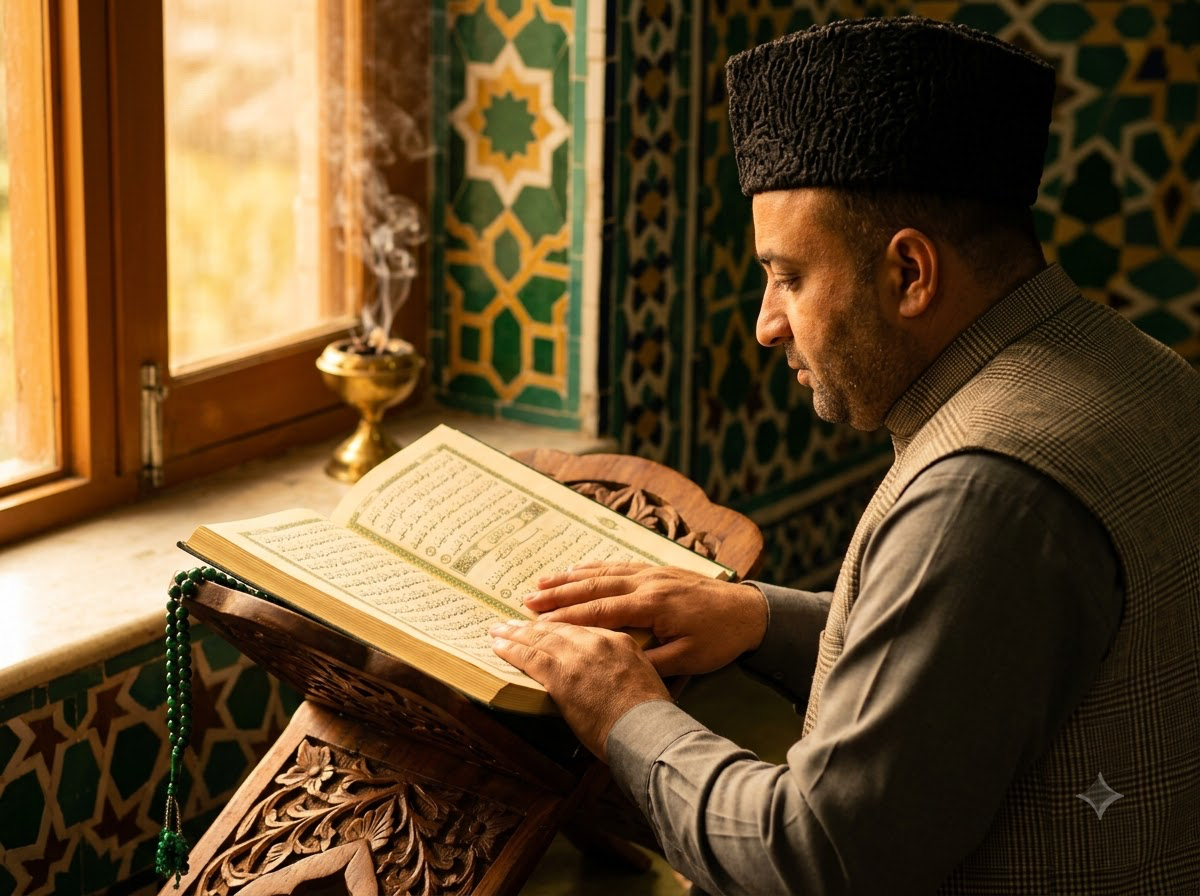
Islamic Istikhara UK
A prayer for guidance, not a prediction
Trusted online guidance, UK-wide
Rooted in Islamic sources, delivered with respect and care.
Fully confidential Islamic sources UK-wide, online
Definition
Definition
Istikhara (Arabic: الاستخارة) refers to seeking what is good or best from Allah in a matter of genuine uncertainty. It combines a short prayer with a dua that asks for guidance towards the outcome that is best for the person’s religion, life, and circumstances — whatever that outcome turns out to be.
Meaning
Meaning
The core meaning is one of humility: rather than assuming you already know the best path, you ask Allah for it directly, while accepting that the answer may not match your initial preference. This is different from asking for a specific result you have already decided you want; the dua explicitly asks for what is good, even if that differs from your own hope.
Purpose
Purpose
The purpose of Istikhara is to bring a decision to Allah with sincerity before acting on it, and to approach the outcome — whatever it is — with a degree of acceptance. It is generally understood to support decision-making rather than replace it: a person still needs to gather relevant information, ask questions, and use their own judgement alongside the prayer.
Timing
When it is used
Genuine uncertainty
When you are unsure between two or more permissible options and no clear ruling settles the matter.
Significant decisions
Commonly used for marriage, career, business, relocation, and other decisions with lasting consequences.
Smaller decisions too
Some scholars note it can be used for smaller matters as well, not only major life events.
Who performs it
Who can perform it
Istikhara can be performed by any adult Muslim capable of praying, for their own decision. It does not require a scholar, imam, or intermediary. Our step-by-step guide explains the method in full. Some people ask a family member or someone more experienced with the prayer to join them or perform it on their behalf, particularly when they are unfamiliar with the process, but views on the value of this vary and it is worth asking a scholar you trust if it matters to you.
In practice
Istikhara and decision-making
Istikhara is best understood as one part of a broader, sensible decision-making process, alongside gathering facts, weighing options, and consulting people whose judgement you trust. After praying, a person is generally encouraged to proceed with whichever option seems reasonable, remaining open to circumstances unfolding differently than expected, rather than waiting indefinitely for a dramatic confirmation before acting.
A common question
Istikhara and dreams
Dreams are one of the most commonly asked-about aspects of Istikhara, partly because some early Muslims reported experiencing dreams around the time of praying. However, a dream is not a required or guaranteed part of the process, and most people who perform Istikhara do not have one. Treating dream content as a certain instruction, or feeling that the prayer has “failed” without one, goes beyond what is reliably established. Read more on our Istikhara signs page.
Getting it right
Common misconceptions
“It will show me a specific sign”
No particular colour, dream, or feeling is a guaranteed indicator. Outcomes are understood in different, often gradual, ways.
“It can predict who I will marry”
Istikhara does not name a future spouse. It asks for guidance on a decision, not identification of a person or event.
“It must be done by a scholar”
It can be performed by the person facing the decision themselves, without needing an intermediary.
“A hard decision means it prayed wrong”
Continued uncertainty after prayer is common and does not mean the prayer was performed incorrectly.
Origins
Where Istikhara comes from in Islamic teaching
The practice of Istikhara is established through hadith rather than through the Qur’an directly. It is most commonly traced to a narration reported by the companion Jabir ibn Abdullah, and recorded in Sahih al-Bukhari, in which the Prophet Muhammad (peace be upon him) is described as teaching Istikhara to his companions in all of their affairs, in the same way he taught them a surah of the Qur’an. That framing is often taken to indicate how routine and accessible the prayer was meant to be — something to reach for readily whenever a genuine decision felt heavy, not a rare or exceptional act.
The dua itself asks Allah for what is good in the person’s religion, life, and the eventual outcome of the matter, and to turn them away from the matter if it is not good for them. That symmetry is worth noticing: it is not a request for a particular result you have already decided on, but a request to be led towards the better path even if it turns out to be different from what you initially preferred. That humility is the emotional core of the practice.
Because Istikhara is grounded in hadith rather than being a Qur’anic ritual on the same footing as the five daily prayers, it is not obligatory. It is strongly recommended when facing a genuine, permissible decision, but leaving it does not carry the same religious weight as leaving an obligatory prayer, and no responsible teacher should present it that way.
Etymology
The word itself
The Arabic word istikhāra is derived from a root associated with seeking what is good (khayr). Grammatically, it carries the sense of asking for or seeking out that goodness. It is worth pausing on that meaning: a person who prays Istikhara is, in effect, saying that they trust Allah’s knowledge over their own about what is genuinely good for them, and are ready to accept the answer even where it does not match their own initial hope.
Some scholars have observed that this framing is significant precisely because human beings so often confuse what they want with what is best for them. The prayer creates a structured moment to acknowledge that gap.
An important distinction
Difference between Istikhara and fortune-telling
Istikhara is prayer, not prediction.
Fortune-telling, astrology, and practices such as ilm ul ramal claim to reveal hidden knowledge or predict specific future events through methods unconnected to sincere supplication. Istikhara does neither: it is a request to Allah for guidance towards what is good, made with the acceptance that the outcome, and its timing, remain outside human knowledge. Mainstream Islamic teaching treats fortune-telling as impermissible; Istikhara is a distinct, established act of worship. See our full comparison on the Istikhara vs astrology page.
In practice
How Istikhara fits into a real decision
One reason Istikhara is sometimes misunderstood is that people expect it to work like a search engine — you type in the question, and out comes the answer. In practice, it works nothing like that. Guidance, when it comes, tends to arrive through the ordinary texture of a decision: which path becomes easier or harder to move on, which door opens or closes, how you feel about the option after time and reflection, and what trusted people around you notice that you might have missed.
Because of that, Istikhara is best treated as one part of a broader, sensible decision-making process. Gather the information the decision actually needs. Ask people whose judgement you trust. Notice whether the option you are considering fits with your values, your responsibilities, and the reality of your situation. Perform the prayer sincerely. Then proceed with the option that seems most reasonable, remaining open to circumstances developing differently than you expected. That combination — prayer, consultation, and considered practical action — is the tradition’s own advice, and it holds up remarkably well in modern life.
It is also worth being patient with yourself if a decision does not feel clearer straight away. Complicated decisions take time to settle regardless of prayer, and continued uncertainty is not a sign that Istikhara has “failed”. It often simply means the situation genuinely needs more time, more information, or more conversation before it can be made well.
When to use it
Decisions Istikhara is typically used for
People bring an enormous variety of decisions to Istikhara. The most common categories are marriage (whether to accept an introduction or a proposal), career (a new job, a change of profession, whether to accept an offer), business (starting a venture, taking on a partner, a significant investment), family (how to support a relative, where to live, how to navigate a difficult relationship), and larger life decisions like moving country, buying a home, or how to shape one’s religious practice.
The one thing all of these have in common is that they involve permissible options between which the right course is not already clear. Istikhara is not used to decide whether to do something forbidden, or to settle a matter where Islamic teaching is already unambiguous. It is used when you are choosing between two or more genuine possibilities and want to bring prayer into that choice.
It is equally worth saying that Istikhara is not reserved for major life events. Some scholars have noted that it can be used for smaller matters too, and there is no obligation to ration it for only the most consequential decisions. If a decision is weighing on you, that in itself is a reasonable trigger for prayer.
Frequently asked questions
Istikhara FAQs
What does the word Istikhara mean?
Istikhara comes from an Arabic root associated with seeking what is good. In practice, it refers to asking Allah to guide you towards the best outcome in a matter you are unsure about.
Is Istikhara mentioned in the Qur’an or hadith?
The practice is established through hadith. It is recorded that the Prophet Muhammad (peace be upon him) taught his companions to seek guidance (Istikhara) in all of their affairs, as narrated by Jabir ibn Abdullah and recorded by Imam al-Bukhari in Sahih al-Bukhari. It is not a Qur’anic ritual in the way that the five daily prayers are.
Do I need a scholar or imam to perform Istikhara for me?
No. Istikhara can be performed by the person facing the decision. Some people choose to ask someone more familiar with the prayer to perform it alongside them or on their behalf, particularly if they are new to it, but this is a matter of personal preference rather than a religious requirement.
Does Istikhara always produce a dream or a clear sign?
No. Many people who perform Istikhara do not have a dream at all, and that is entirely normal. Guidance is often reflected in a growing sense of ease or difficulty around a decision over time, rather than a single dramatic moment.
Can Istikhara be used to predict the future?
No. Istikhara is a request for guidance about what to do, not a method for predicting future events, revealing hidden knowledge, or identifying specific people or dates. Presenting it that way moves outside what the practice is for.
Is Istikhara the same as astrology or fortune-telling?
No. Istikhara and astrology come from entirely different frameworks. Istikhara is a prayer asking Allah for what is good, with no claim to reveal the future, while astrology and fortune-telling claim to predict outcomes through unrelated means and are not part of this practice.
Further reading
Continue learning
How to perform Istikhara
A step-by-step guide to the intention, prayer, and dua.
Learn moreIstikhara dua
The dua in Arabic, transliteration, and English meaning.
Learn moreIstikhara prayer
A closer look at Salat al-Istikhara and its method.
Learn moreIstikhara signs
Understanding dreams, feelings, and outcomes after prayer.
Learn moreIstishara and Istikhara
How consultation and prayer for guidance work together.
Learn moreSalat al-Hajah
The prayer of need, and how it differs from Istikhara.
Learn moreDua for guidance
General dua for guidance, beyond the specific Istikhara dua.
Learn moreHow long does Istikhara take?
A realistic answer about timing and clarity.
Learn more